Event recap · August 18, 2026 · The Main Street Manual, Session 1
Yellow Pages 2026: How to Be Discovered
People used to look you up. Now AI does.
This is the first session in a series called The Main Street Manual. The premise is simple: the way customers find businesses is moving to AI assistants, and most small businesses have no idea whether they show up there or not.
The long-term picture behind NANDA is agents talking to agents. But there are phases to get there, and this series is about the phase you can act on right now. So everything below is meant to be actionable rather than visionary. If the agentic web is going to be worth anything, it has to include the businesses that make up most of the economy, not just the ones with a growth team.
The Problem
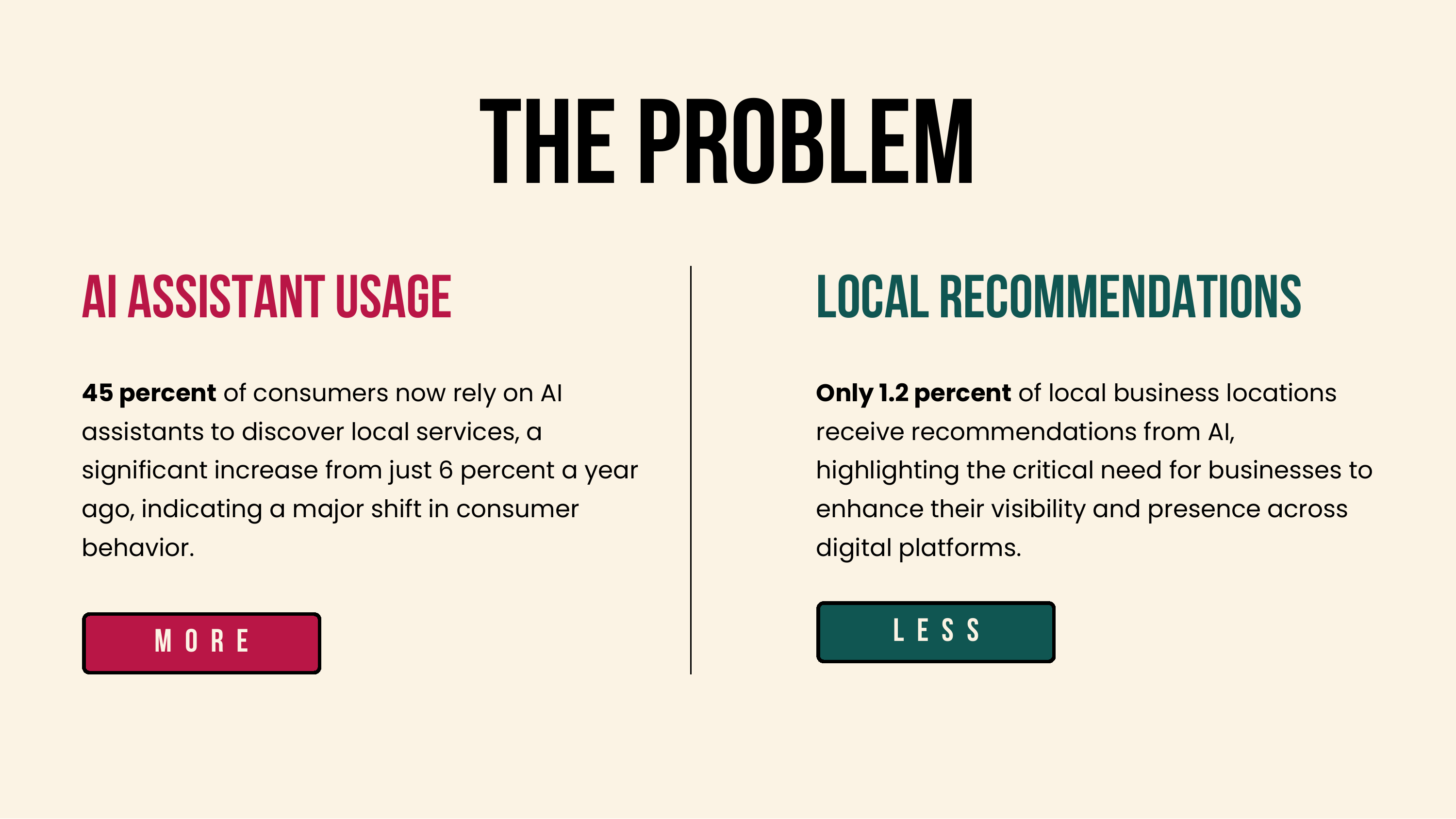
45 percent of consumers now rely on AI assistants to find local services. A year ago that number was 6 percent. There’s no reason to expect the curve to flatten.
Meanwhile only 1.2 percent of local business locations get recommended by AI. That gap is the entire subject of this session.
Here’s what makes it urgent rather than merely interesting. A search results page gives you ten options and lets you pick. An assistant gives you two or three. AI shows fewer different things to different people, so the shortlist is genuinely short, and being on it stops being a nice-to-have.
Three Steps to Success
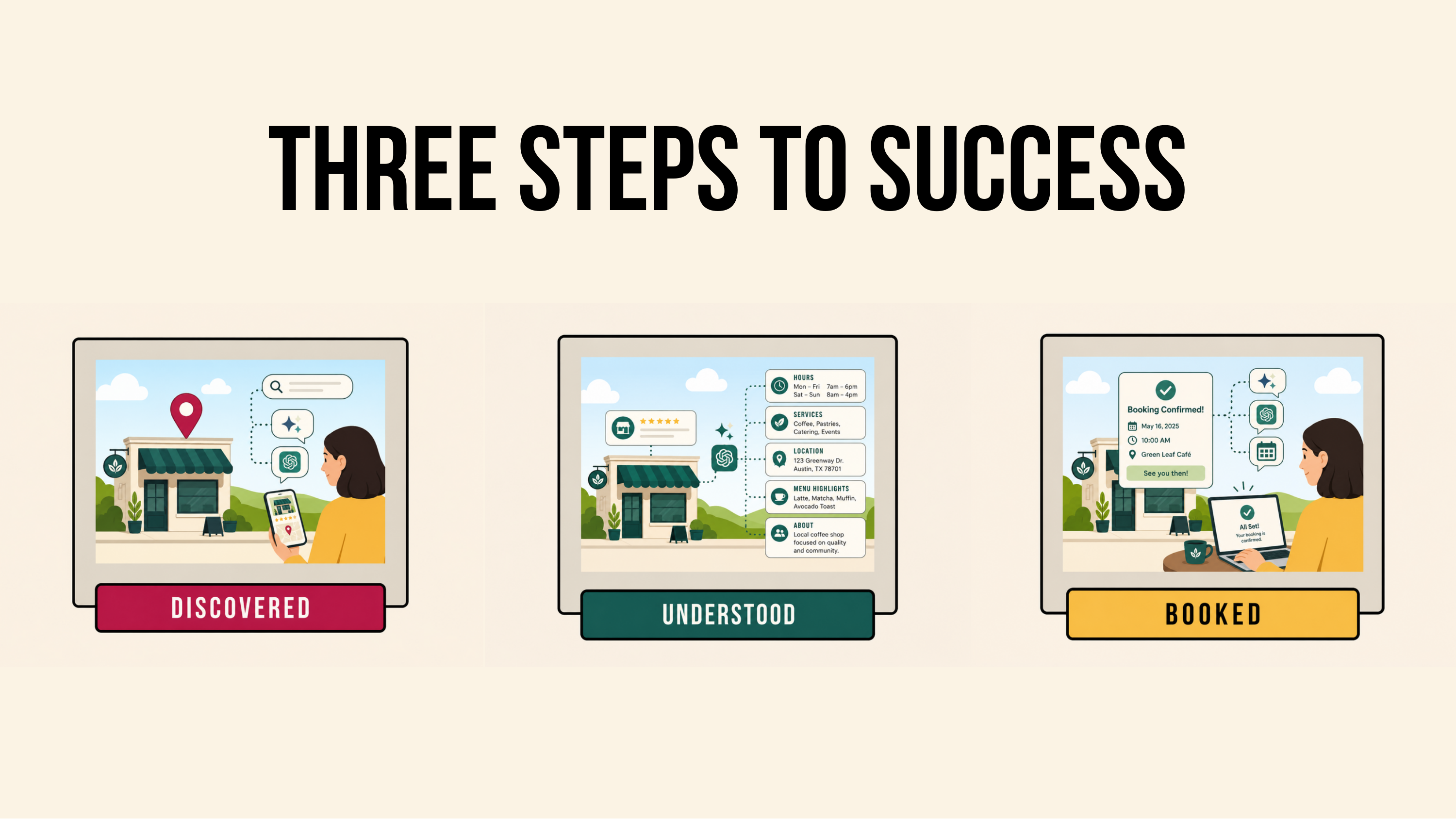
There are three core steps here. First, how do you make sure you’re findable to the basic agents or chatbots that are already out there. ChatGPT and Gemini are already almost serving the role of personal agents for a lot of people, finding them products, acting as a search and a means to eventually convert. The second part is understood, because as we get into agentic search, what an agent finds important and the way people ask things will begin to change. Then finally, booked.
Discover: Where?
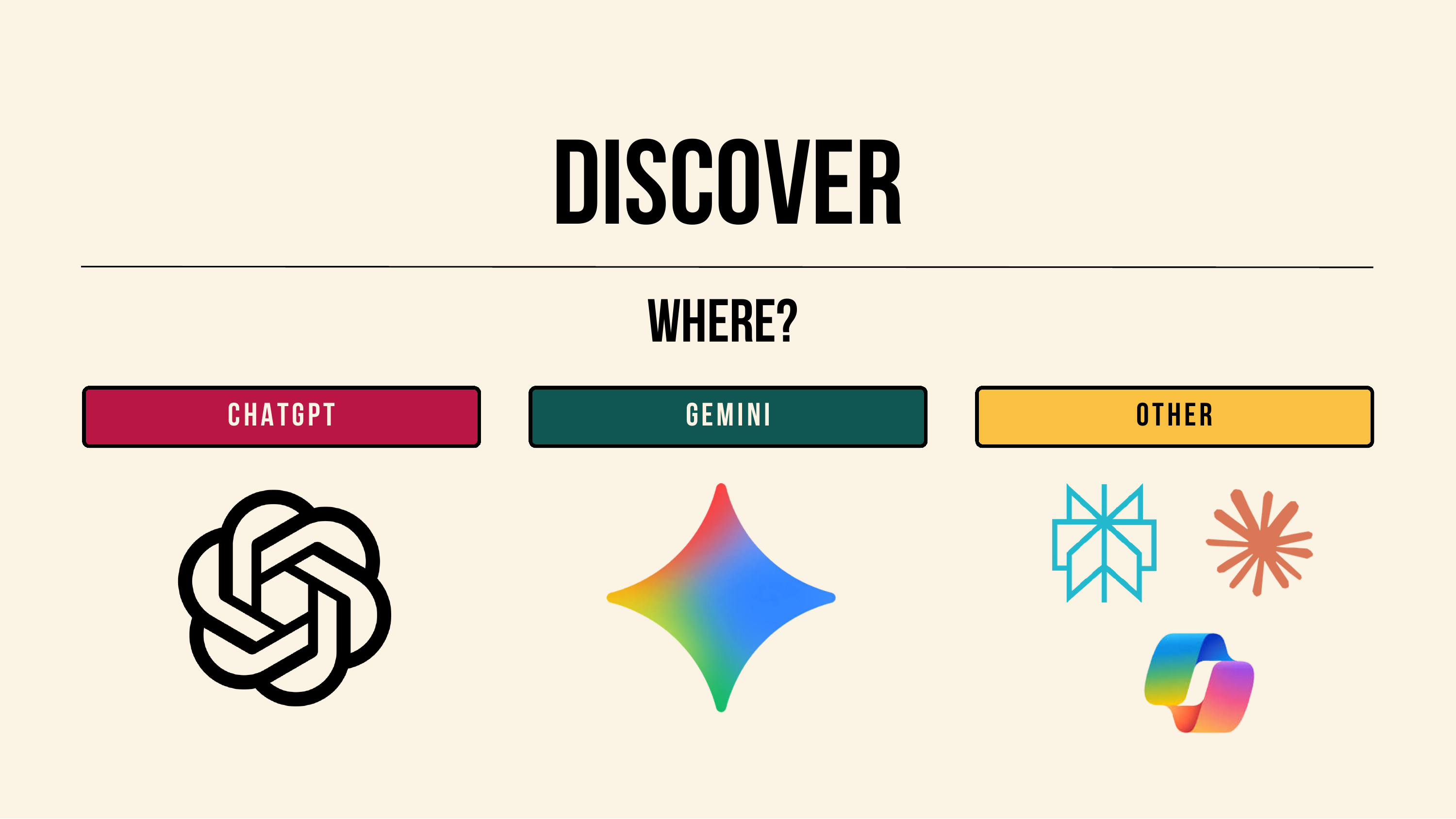
There are three main places where agents are already acting as consumer agents. ChatGPT and Gemini have a large bulk of this market share already. Blake couldn’t find a perfect number for the split, and since these sessions stick to peer-reviewed data or reputable sources, he left it out rather than include something shaky. Perplexity is another major player in this space. Claude and Copilot tend to be a little more in B2B acquisition than totally consumer facing, but they also have their own ways of operating.
Discover: The Checklist
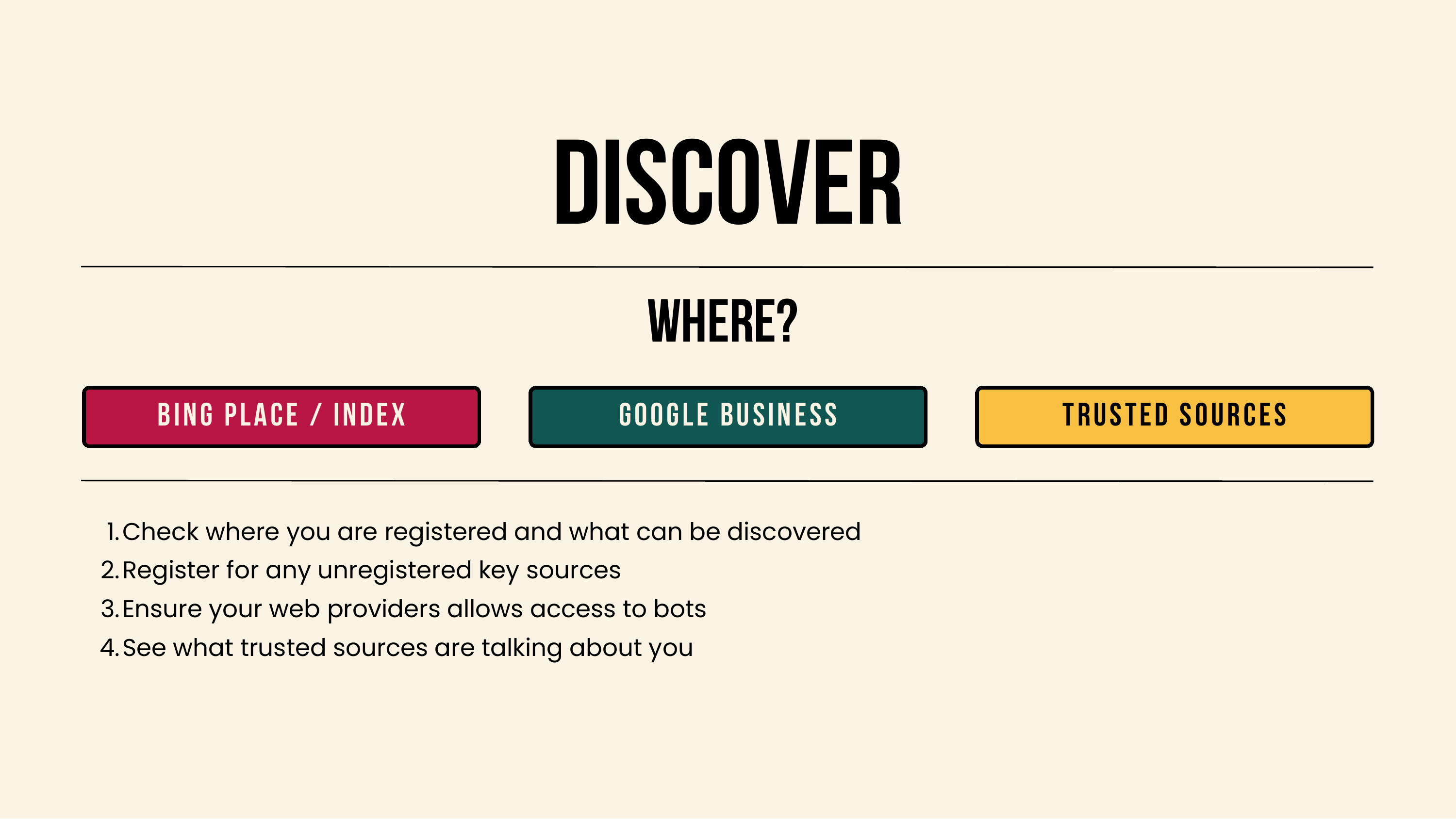
For a long time now with SEO you wanted to be registered via Google. Nowadays it’s incredibly important to register via Bing, and there are two different ways to register on Bing, places and index. Get in both if you can, because some of the AIs like ChatGPT or Copilot default to Bing over Google. The other way to be discovered is making sure you’re inside of trusted sources. That was always called backlinks. Now sources like Reddit matter, and different AIs lean on different sources. A fourth item: give bots access to your site. There are a lot of concerns about data and data scraping, especially if you provide information as a service, but as more consumers shift here, you could lose a lot by not allowing bots to reach your page.
Understood: Generative Engine Optimization
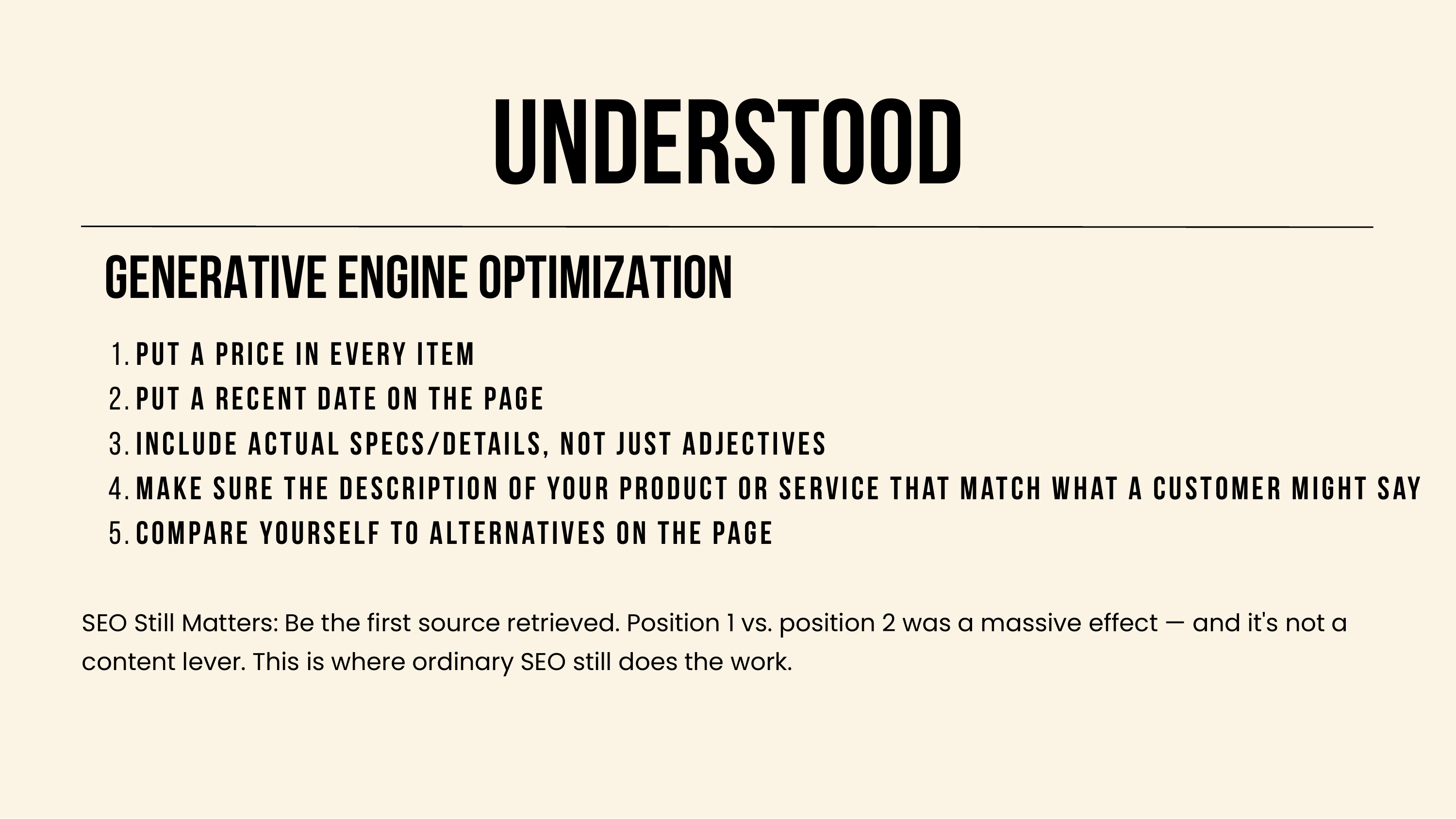
Price is very critical. This comes out of a Stanford study that looked at what consumers were putting into these engines and how the engines were looking. If someone asks what are cheap options for this near me, and your site doesn’t display a visual price, you won’t be included, straight up, because it’s quote based pricing. Put a number down even if you say it’s estimated or it can vary. Second, put a date on every page including product pages, because these engines want to verify how recent the information is. Third, include specs or details, not just adjectives, so you can be pulled into a comparison. Fourth, descriptions are moving toward questions and answers, less keyword jamming and more what someone might actually say, which often isn’t as technical as how we talk about our own businesses. Fifth, comparisons are huge, so having the comparison page itself where you compare yourself to competitors can make a really big difference. Try to be as honest as you can.
One attendee added that putting actual FAQs on the page works well, since these engines summarize a lot and people ask questions in very different ways. Blake said he’d dug hard for a statistical paper supporting that specific claim and the Stanford paper he used tried it and was not able to show statistical significance, though he didn’t find anything to disprove it either.
There’s also a cheeky one. If you can get information onto Reddit where people ask Reddit thread questions and those get answered, ChatGPT especially will think of that even higher. Reddit went from probably the least verifiable source to one of the most trusted things on the internet and we just didn’t even realize it.
And SEO isn’t dead. One of the most interesting findings was that the difference between being number one on Bing and number two on Bing is drastically bigger than ever before. Humans click whatever link they like, maybe even both. Agents are expensive to run, so they often go to the first source. They’re like the middle schooler who used to get yelled at in class for only checking one source.
Understood: Did It Work?
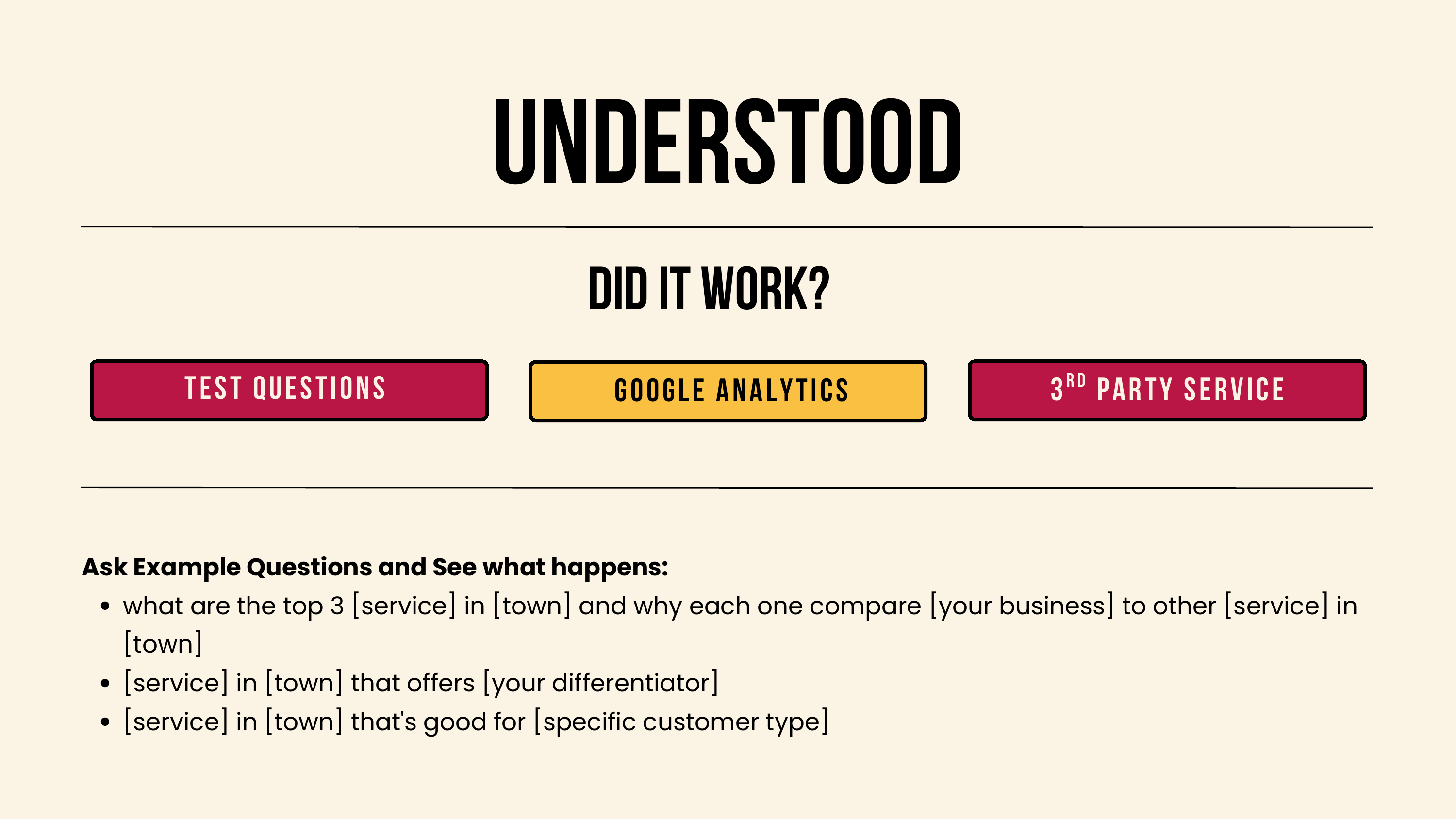
You want to measure whether it worked. There are three ways. Google Analytics or third party services that offer these metrics free or paid, which tell you how much you’re coming up in these engines across different questions. Or just try it. Shoot a test question into GPT, shoot a test question into Gemini, and see what comes up. Create a set of test questions, give them to a friend or two, and see whether you pop up. Make sure they’re specific to what makes your business valuable. If you’re an all-in-one solution for barber shops, put that in the search, because that’s how you’ll find the right customers anyway. Build a little test suite and you can measure what’s improving.
Booked
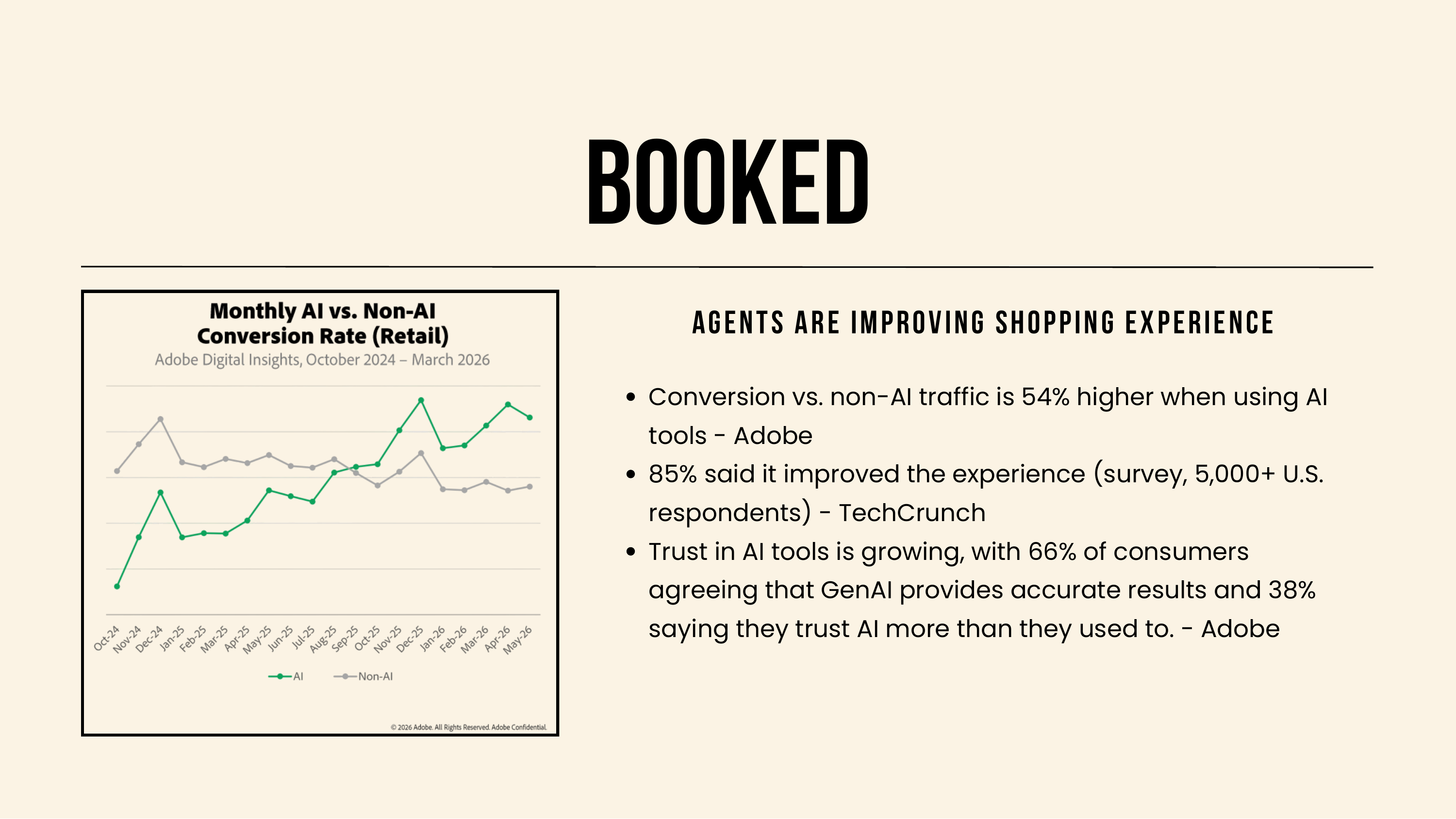
There was a wonderful study done by Adobe on conversion metrics. Traffic coming from AI converts at a much higher rate than any other channel, 54 percent higher than traditional search. A TechCrunch survey found 85 percent said it improved their customer experience, though Blake flagged his own uncertainty there: there’s probably some weighting or bias based on who TechCrunch surveyed, and he didn’t get too detailed into how they sampled. Trust is also growing, with 66 percent of consumers agreeing GenAI provides accurate results and 30 percent saying they trust AI more than they used to. People are asking broader questions, getting more specific answers, getting good comparisons, and making a decision faster. If you can be the one that comes up, that’s where the real advantage lies. Instead of going into a site, maybe I ask my agent, it talks to your agent, and it buys something. Consumer expectations are going to increase toward “I can talk to this thing and it will give me what I want.”
Takeaways
- 45 percent of consumers now rely on AI assistants to find local services, up from 6 percent a year ago, but only 1.2 percent of local business locations get recommended by AI.
- Register on Bing places and index, not just Google, because ChatGPT and Copilot default to Bing.
- Put a visible price and a date on every page. Quote-based pricing with no number means you get left out of “cheap options near me.”
- Write descriptions the way a customer would ask, add specs instead of adjectives, and build a comparison page.
- Test it yourself. Ask GPT and Gemini your own test questions and see whether you show up.
Sessions run about 30 minutes with 30 minutes of open office hours after. If there's a topic you want covered, come say so.
Find upcoming sessions